Comprehensive Advice on Throat Problems and Treatments

The throat is part of the body that most people take completely for granted until something goes wrong. This can be worrying because the throat is involved in so many essential functions; swallowing, breathing, eating, drinking and communicating.

This site has been put together by a small team of medical writers to provide an extensive resource on throat problems and their symptoms. Although this is not intended to replace your GP or ear, nose and throat specialist, this information can help you decide whether you need it and when you should seek medical advice from a health professional.

Should I be worried about my sore throat?

Most people experience a sore throat when they get a cold; viruses that cause the common cold invade the cells that line the throat, killing some of them and causing inflammation and an immune response. The symptoms include an itching, burning or stinging sensation when you swallow. In the case of a cold or even flu, this rarely lasts for more than a couple of days. In general, such short-lasting throat pain is nothing to worry about and it’s important to remember that your GP will not give you antibiotics since viral infections do not respond to them.

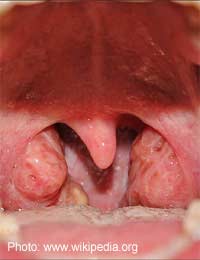
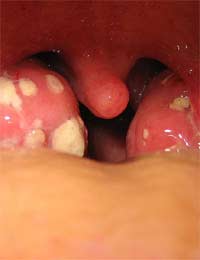
If your throat symptoms last longer, you need to determine the underlying cause. More serious viral infections such as glandular fever also cause the throat to feel very raw, symptoms can flare up for weeks or even months. Bacterial throat infections are more serious and can cause quinsy if untreated. This extremely severe form of sore throat is due to an abscess forming deep within one of the tonsils. Thankfully, bacterial infections such as diphtheria are now rare because of childhood vaccinations but can affect children and adults who have not been immunised.

Oral thrush, an infection of the mouth and throat caused by the Candida fungus can also lead to a sore throat but is easily treated using medicine bought over-the-counter.

Why can’t I swallow properly?

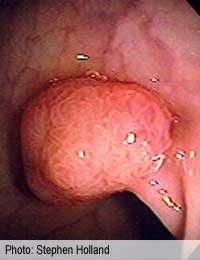
Having a bad sore throat can make it difficult to swallow for a short time but there are other causes that lead to problems in the longer term. Chronically inflamed tonsils, throat polyps or throat ulcers can make you aware that it is hard to swallow. The underlying cause needs to be investigated by your GP so that you can be given the right treatment. Although doctors make every effort not to take out your tonsils, having repeated attacks of tonsillitis or recurrent tonsil stones can make this unavoidable.

The medical term for persistent swallowing difficulties is dysphagia; this can be caused by problems with the muscles in the throat due to damage by stomach acid and is a common after effect of a stroke. The part of the brain that sends nerve signals to direct the throat muscles to contract is damaged, so the muscles fail to work in a coordinated way.

Some people find that they develop a phobia about swallowing. This doesn’t usually affect eating or drinking, but some people find they are unable to swallow a tiny pill or capsule when they have to take medicines regularly. The problem is so common that many medicines are formulated in liquid form; this is better than crushing tablets as this can change the way the medicine is absorbed and it may not work properly.

Why have I lost my voice?

A viral throat infection causes destruction of the delicate mucous membranes lining the inside of different structures. If the larynx, commonly known as the voice box becomes affected, this can cause the vocal cords to become swollen. When this happens they are no longer able to vibrate properly and cannot produce sound. This can lead to hoarseness or a complete loss of voice, both common symptoms of laryngitis.

Polyps on the vocal cords can also affect your ability to speak. These sometimes need to be removed but the quality of your voice afterwards may be different. When the singer Julie Andrews had polyps removed from her vocal cords, for example, she became completely unable to sing.

Although it is rare, some people lose their voice completely even though their throat is apparently completely normal. This may happen as a result of deep psychological stress and treatment involves counselling and therapy.

Why have I got bad breath?

Not all common causes of bad breath are related to the throat. Poor dental hygiene, inflamed gums, sinus problems and kidney disease can all cause your breath to have an unpleasant odour. People with diabetes sometimes overproduce molecules called ketones, which cause the breath to smell a bit like acetone mixed with pear drops.

If a problem in your throat is responsible, you usually experience other symptoms in addition to halitosis. A severe attack of tonsillitis, strep throat or inflamed adenoids can make your breath smell bad, as can blockage of the Eustachian tube. Some people under produce saliva, leading to a condition called dry mouth; most people affected experience very bad breath despite good dental hygiene and using a mouth wash regularly.

Should I be worried about a lump in my throat?

Some lumps in the throat are really in the mind; when we feel nervous, anxious or stressed, the muscles in the throat can tense up, causing knots that make you feel as if you have something stuck in your throat. This is not due to any disease that affects the throat directly but getting this sensation is a sign that you need to take steps to manage your stress more effectively.

The feeling of something caught in the throat, or of having a sore throat that doesn’t get better easily, can also happen as a result of damage to the top of the oesophagus caused by reflux of stomach acid. Gastroesophageal reflux disease (GERD) can cause long term damage to the oesophagus and needs to be treated promptly.

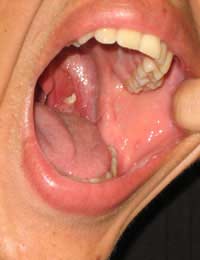
A physical lump in the throat that can be seen when your mouth is open, or that can be felt from the outside of the neck can be something as simple as a swollen lymph node or gland, or a harmless cyst. Lumps are only very occasionally a sign of throat cancer, but as this is a serious illness that needs to be treated as soon as possible, lumps should always be checked out by your doctor.

A large lump on one side of the neck can also be an enlarged thyroid gland. This butterfly shaped gland is responsible for controlling our metabolic rate; if it becomes enlarged this could be because it is over-producing or under-producing thyroid hormone. Too little causes the disease hypothyroidism, in which your metabolism slows down, while too much causes hyperthyroidism, in which your metabolism speeds up. Both conditions are easily treated once they are diagnosed.

How can I take better care of my throat?

Taking care of your throat involves taking good care of your health by drinking plenty of water, eating a healthy diet and doing regular exercise. Being overweight causes many different health problems but specific effects on the throat include an increased risk of acid reflux damage to the oesophagus and sleep apnoea. This develops when the weight of excess tissue around the neck blocks your airways when you are sleeping, causing you to stop breathing for a minute or so. This leads to very disturbed sleep and tiredness during the day and can be life threatening in people who are morbidly obese.

Keeping stress under control can help if you are prone to throat-related anxiety symptoms. Above and beyond that, avoiding smoking and only drinking alcohol within safe limits are important. Both of these social habits increase the risk of various types of throat cancer, including mouth cancer, gum cancer and salivary gland cancer. As well as taking action to reduce your risk of developing cancer, you can also increase the chance that any throat or mouth cancer will be detected early by having a regular check up with your dentist. While he or she is checking your teeth, they also pay careful attention to any sores or lesions in the soft tissues and will refer you to your GP for further investigations.

Constant niggling throat soreness, itching, hoarseness and a gritty feeling in the throat can all result from allergies. Hay fever and dust mite allergy can affect the throat and taking medication to damp down the excess immune response can help make your throat feel more comfortable.

Finally, you need to spare a thought for your throat health if you engage in oral sex. Herpes infections can pass from the genitals of one partner into the mouth and throat of the other, leading to cold sores and ulcers. Having oral sex with someone who has an active gonorrhoeal infection can also cause the bacteria to infect the mucous membranes of the throat. Having oral sex with a different partner can then transfer the bacteria and establish a genital infection, so be sure to use a condom.

Popular Articles...
What is Quinsy?
WHAT IS QUINSY?: Often mistaken for common tonsillitis, quinsy has the potential to be very serious. Although it may begin with the same...
Lumps in the Throat
LUMPS IN THE THROAT: Lumps in the throat can happen in anyone and do not necessarily mean anything sinister is going on as many people...
Ulcers In The Throat
ULCERS IN THE THROAT: Ulcers can be very painful and annoying for the sufferer, and there may be many causes. Most people associate ulcers...
Our Categories...
About the Throat
About the Throat: Preventing Throat Problems, Keeping Your Throat Healthy, What Do the...

Ask Our Experts
Ask Our Experts: Pain in Side of Throat: What Could Be the Cause?, Could Cow's Milk Be...

Case Studies
Case Studies: My Baby Was Born Tongue Tied : A Case Study, I Have a Phobia About...

Common Throat Problems
Common Throat Problems: Allergies and Your Throat, Do You Have Bad...
Lifestyle & Your Throat.
Lifestyle & Your Throat.: Why You Need Your Tonsils, Smoking and Throat...

Oral & Throat Cancers
Oral & Throat Cancers: Facts and Figures About Throat Cancer, Cancer of...

Throat Infections
Throat Infections: Can You Still Get Quinsy?, Thrush and the Throat, What is Quinsy?,...
Throat Surgeries
Throat Surgeries: What is an Adenoidectomy?, What is a Laryngectomy?, What is a...
Our Quick Links...
Most Popular...
Add to my Yahoo!
Add to Google
Stumble this
Add to Twitter
Add To Facebook
RSS feed
You should seek independent professional advice before acting upon any information on the ThroatProblems website. Please read our Disclaimer.